



What Is an Emergency Fund? Why It Matters and How Much You Need


Unexpected expenses are a normal part of life. Cars break down, appliances stop working, medical bills appear, and jobs can disappear with little warning. While these situations are often stressful, the financial impact can be significantly different depending on whether you have money set aside to deal with them.
Table of Contents
This is where an emergency fund comes in.
An emergency fund is one of the most frequently recommended financial tools, yet many people are unsure how much they need, where they should keep it, or even what qualifies as a true financial emergency. Advice such as “save six months of expenses” is common, but it can also feel overwhelming when you’re just getting started.
The good news is that building an emergency fund doesn’t require perfection. It simply requires creating a financial buffer that helps you handle unexpected expenses without immediately relying on debt.
What Is an Emergency Fund?
An emergency fund is money set aside specifically for unexpected expenses or financial emergencies, such as medical bills, job loss, urgent home repairs, or major car repairs.
Unlike money saved for holidays, birthdays, or planned purchases, an emergency fund exists to protect you from costs that are difficult to predict and often difficult to avoid.
Think of it as a financial safety net.
When an unexpected expense occurs, the purpose of an emergency fund is to provide immediate access to cash so that you don’t have to rely on credit cards, personal loans, or other forms of debt to cover the cost.
For example, imagine your car suddenly needs a $1,200 repair. Without emergency savings, you may have to put the expense on a credit card or delay the repair altogether. With an emergency fund, you can cover the cost and then focus on rebuilding your savings rather than managing new debt.
While emergency funds are often discussed in terms of numbers and savings targets, their real purpose is flexibility. They create breathing room during financially stressful situations and make it easier to recover from unexpected setbacks.
An emergency fund does not prevent emergencies from happening. It simply helps prevent emergencies from becoming financial crises.
Why Emergency Funds Matter
The primary purpose of an emergency fund is simple: it gives you options when unexpected expenses arise.
Without emergency savings, even relatively small financial setbacks can create larger problems. A medical bill, vehicle repair, or temporary loss of income may force you to rely on credit cards, personal loans, or other forms of borrowing. What begins as a short-term expense can quickly become a long-term financial burden if interest charges and debt repayments are added to the equation.
An emergency fund helps break this cycle by providing money that is already available when you need it.
Beyond helping you avoid debt, an emergency fund can also reduce financial stress. Knowing that you have money set aside for unexpected situations creates a sense of stability, even if the balance is not large. While it won’t eliminate the inconvenience of an emergency, it can make the situation more manageable.
This is particularly important because emergencies rarely arrive at convenient times. Job losses often occur during periods of economic uncertainty. Major repairs tend to happen when budgets are already stretched. Medical expenses don’t wait until you’ve finished saving for them.
What Counts as a Financial Emergency?
One challenge many people face when building an emergency fund is deciding when it should actually be used.
Not every unexpected expense is a financial emergency.
In general, a financial emergency is an expense or event that is both necessary and difficult to predict. These situations typically affect your health, safety, income, housing, or ability to meet essential obligations.
Common emergency fund examples include:
- Job loss or a significant reduction in income
- Unexpected medical expenses
- Major car repairs required for transportation
- Urgent home repairs, such as plumbing leaks or heating failures
- Emergency travel for a family crisis
On the other hand, some expenses may be unexpected but do not necessarily qualify as emergencies.
Examples include:
- Holiday shopping
- Planned vacations
- Upgrading electronics
- Seasonal sales or limited-time discounts
- Annual subscriptions you knew were approaching
A useful way to evaluate an expense is to ask yourself a simple question: would this situation still require immediate attention if I didn’t have an emergency fund?
If the answer is yes, it may be a genuine emergency. If the expense could reasonably be planned for in advance, it may be better suited for a separate savings goal or sinking fund.
Understanding this distinction helps ensure that your emergency fund remains available for the situations it was designed to handle.
How Much Should You Have in an Emergency Fund?
A commonly recommended guideline is to save enough to cover three to six months of essential living expenses. The idea is that if you experience a job loss, medical emergency, or another significant financial setback, your emergency fund can help cover necessary costs while you recover.
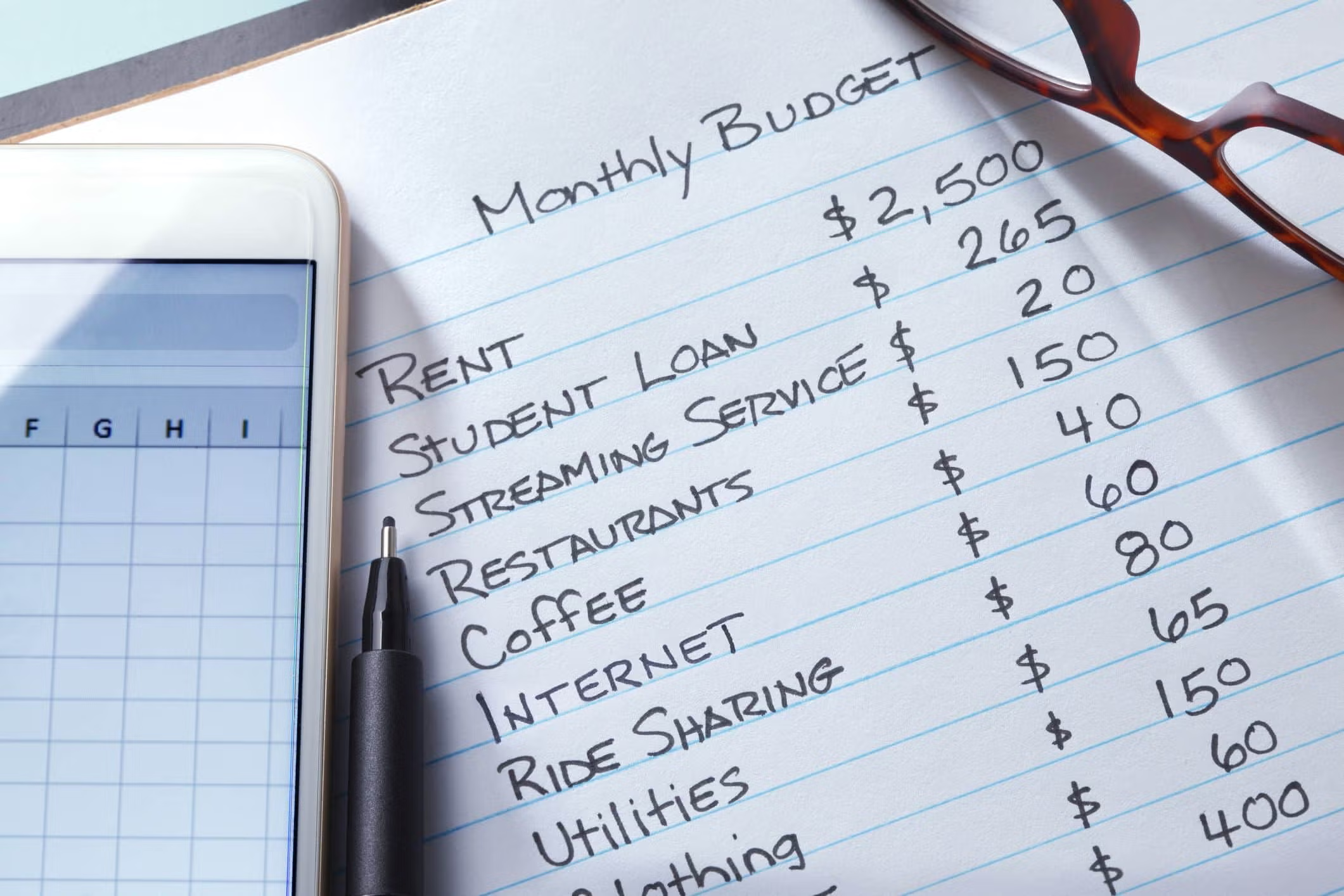
For example, if your essential monthly expenses total $2,500, a fully funded emergency fund would typically range from $7,500 to $15,000.
However, it’s important to remember that this is a guideline, not a requirement. The amount you need depends on factors such as your income stability, household responsibilities, and overall financial situation.
For many people, the most practical approach is to build an emergency fund gradually. A goal of $500 or $1,000 can still provide meaningful protection against unexpected expenses and may prevent a minor setback from turning into debt.
Ultimately, the best emergency fund is one that reflects your circumstances and provides enough financial flexibility to handle life’s unexpected costs.
Where Should You Keep an Emergency Fund?
An emergency fund should be easy to access when needed, but not so accessible that you’re tempted to spend it on everyday purchases.
For most people, a high-yield savings account is one of the best places to keep an emergency fund. These accounts typically offer higher interest rates than traditional savings accounts while still allowing quick access to your money when an emergency occurs.
Other options may include money market accounts or dedicated savings accounts that are separate from your primary checking account.
Regardless of where you keep your emergency fund, three qualities matter most:
- Safety
- Accessibility
- Separation from daily spending
For this reason, many financial professionals recommend avoiding stocks, cryptocurrencies, and other volatile investments for emergency savings.
While investments can generate higher returns over time, they can also lose value during periods of market volatility. An emergency fund serves a different purpose. Its role is not to maximise growth. Its role is to provide reliable access to cash when you need it most.
When an emergency happens, having immediate access to your money is usually far more important than earning the highest possible return.
How to Start Building an Emergency Fund
Starting an emergency fund is less about large, intimidating targets and more about building consistency over time. The most effective approach is to begin small and make it automatic.
A good starting point is a modest target such as $500 or $1,000. This amount is often enough to cover common unexpected expenses like minor car repairs or urgent bills, and it creates a financial buffer while you build toward a larger goal.
From there, the next step is to automate your savings. Setting up a recurring transfer from your checking account to a separate savings account ensures that you are consistently building your emergency fund without having to rely on memory or discipline alone. Even small weekly or monthly contributions become meaningful over time.
It also helps to use unexpected income intentionally. Tax refunds, work bonuses, side income, or even cash gifts can be partially or fully directed into your emergency fund. These are opportunities to grow your savings faster without affecting your regular budget.
Finally, keep your emergency fund separate from your everyday spending money. When it sits in the same account as your daily transactions, it becomes easier to use it for non-emergencies. A separate account reinforces its purpose and reduces unnecessary spending.
Common Emergency Fund Mistakes
One of the most common mistakes is waiting for the “right time” to start. People often assume they need to be in a better financial position before saving, but in reality, starting small is what creates progress in the first place.
Another mistake is investing emergency savings. While investing is useful for long-term growth, an emergency fund needs to remain stable and accessible. If the market drops at the wrong time, the money you need may no longer be available in full.
Using the fund for non-emergencies is another issue. Expenses like holidays, shopping, or planned upgrades can slowly drain the fund and weaken its purpose. An emergency fund only works if it is preserved for true financial shocks.
Finally, setting overly ambitious targets too early can slow down progress. A goal like “six months of expenses” can feel overwhelming at the beginning and cause people to stop altogether. Smaller, achievable milestones tend to be more effective because they build momentum.
Conclusion
If you do not currently have an emergency fund, the next step is not calculating six months of expenses or trying to figure out the “perfect” amount to save. It is simply starting with what you can realistically put aside right now.
Even a small buffer changes how you respond to unexpected costs. A few hundred dollars can mean the difference between handling an emergency comfortably or falling into debt. Over time, that small beginning grows into something more stable and more protective.
The key is consistency, not size at the start. As your income changes or your expenses become easier to manage, your emergency fund can grow alongside it. What matters most is that you begin building that financial cushion now, so that when life inevitably throws something unexpected your way, you are not starting from zero.
Join 1,500+ Readers Building Smarter Financial Habits
Simple strategies to help you save more, invest wisely, and grow your income every week.
Latest Posts








TOP NEWS




Copyright 2026 Fintroversy. All rights reserved powered by fintroversy.com
No Comments